
This waterfall chart illustrates how disability cases move through each stage of the SSDI application process. It also breaks down the percentage of outcomes at every level, including approvals, denials, dismissals, and remands. Continuing Disability Reviews (CDRs) are not included, except at the Federal Court level.
A remand occurs when a higher authority, such as the Appeals Council or a federal court, sends a case back for further review. This can happen for several reasons, including insufficient evidence in the initial decision, procedural errors during the hearing, or the emergence of new, relevant evidence. After a remand, the case is reconsidered, often through a new hearing where additional evidence may be presented. In some instances, a different judge may be assigned. While a remand provides another opportunity to strengthen a claim, it does not guarantee approval.
A dismissal, on the other hand, means the Social Security Administration (SSA) has closed an appeal—most often at the hearing level—without issuing a decision on disability status. Unlike a denial, which is based on the merits of the claim, a dismissal is typically the result of a procedural issue, such as failing to meet filing requirements or not appearing for a scheduled hearing.
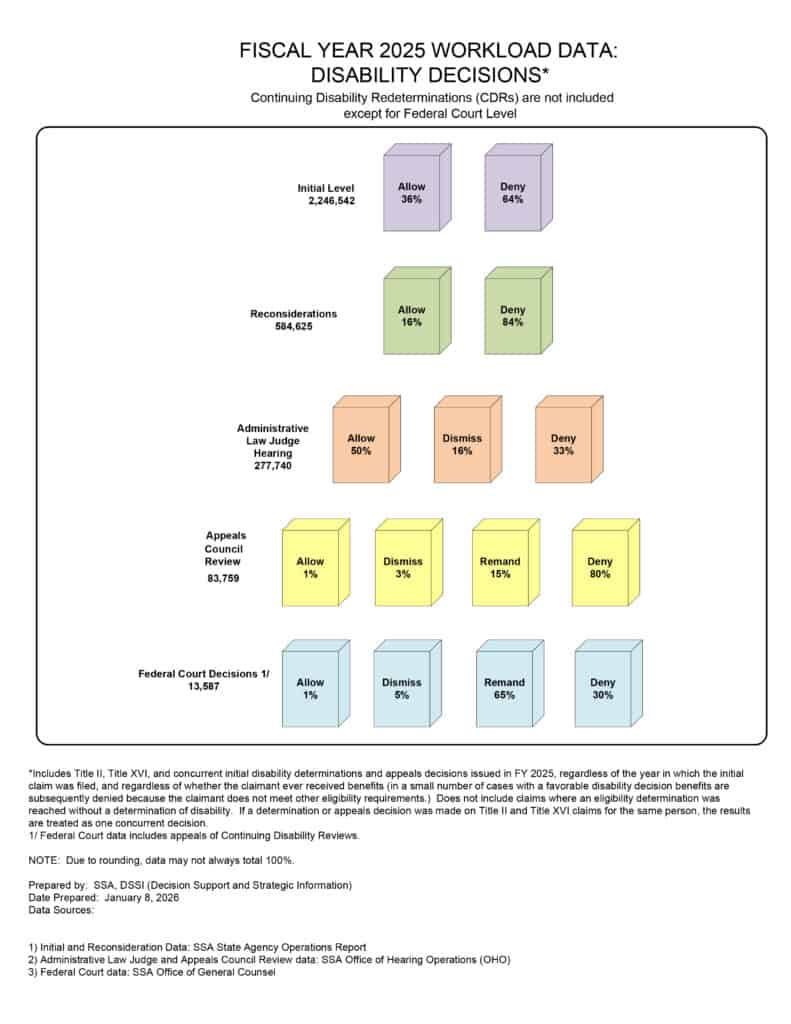
2025 Disability Decisions by Claims Level
- At the initial claim level, 2,246,542 cases were processed, with 36% approved and 64% denied.
- At the reconsideration level, 584,625 cases were processed, with 16% approved and 84% denied.
- At the Administrative Law Judge (ALJ) hearing level, 277,740 cases were processed, with 50% approved, 16% dismissed, and 33% denied.
- At the Appeals Council review level, 83,759 cases were processed, with 1% approved, 3% dismissed, 15% remanded, and 80% denied.
- At the Federal Court level, 13,587 cases were processed, with 1% approved, 5% dismissed, 65% remanded, and 30% denied.
Get Help With Your SSDI Claim
Applying for Social Security Disability benefits can be complex, especially when facing a denial or navigating the appeals process. Having experienced legal guidance can make a meaningful difference at every stage of your claim.
At Kerr Robichaux & Carroll our Social Security disability attorneys help clients apply for SSDI benefits, file appeals, gather medical evidence, and represent their interests at hearings and beyond. Whether you are filing an initial application or challenging a denial, our team is here to guide you through the process and fight for the benefits you deserve.
Contact Kerr Robichaux & Carroll today to discuss your case and learn how we can help.